
We investigate the neural basis of higher cognitive functions such as speech recognition, multisensory associations, and communication.
We implement state-of-the-art experimental and analytical methods to study the neuronal activity of monkey brains trained in acoustic and crossmodal paradigms.
Dr. Luis Lemus
Associate Researcher of the Department of Cognitive Neuroscience of the Institute of Cellular Physiology of the UNAM and member of the National System of Researchers, SNI 1
He is a Biologist who graduated from the UNAM Faculty of Sciences. He obtained a Ph.D. in Biomedical Sciences from the IFC and did a postdoc at Princeton University (NJ, USA).
He has investigated working memory, decision making, sensory perception, and multisensory integration in behaving monkeys.
He teaches graduate courses in cognitive neuroscience and has delivered more than 15 lectures on various brain-related issues in the last two years.
He has more than 20 original article publications in journals such as Nature, Nature Neuroscience, PNAS, and Neuron and five book chapters.
He is currently investigating how the brain represents concepts: the mental images that encompass the totality of an object or subject. For example, he does so in experiments with monkeys trained to recognize and discriminate auditory, tactile, and visual stimuli.
Recognition of acoustic categories
We hypothesized that acoustic recognition emerges from a hierarchical build-up of acoustic representations stored along auditory cortices of the temporal lobe, i.e., from tones to syllables, and then words and short phrases. To test such a hypothesis, we record the electrical activity of auditory neurons of monkeys trained to recognize multisyllabic words.
Multisensory equivalence & concepts
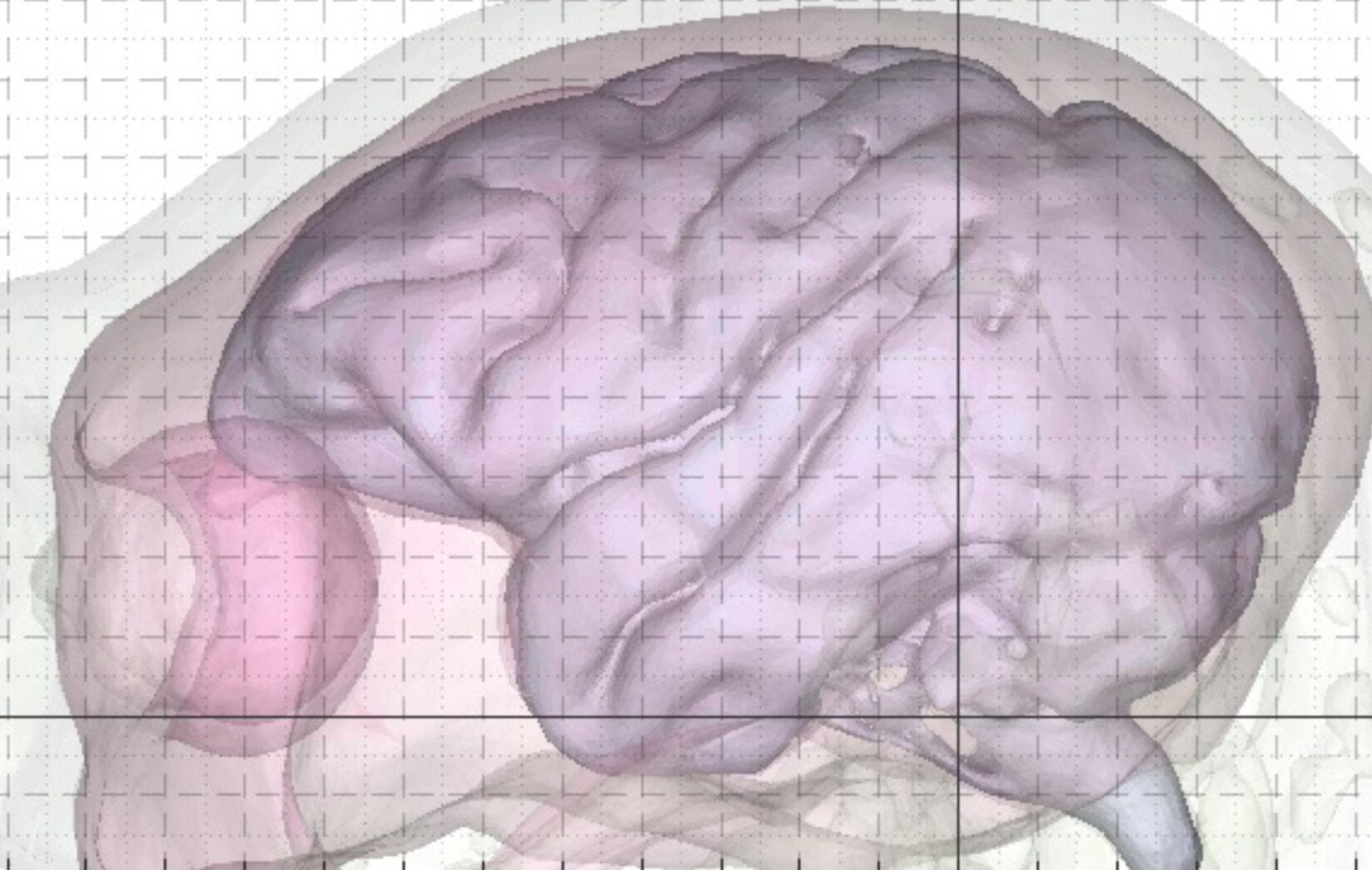
We trained macaques to match sounds and pictures to understand how the brain produces a perceptual correspondence between sensory modalities (see video). For example, how is it possible that the sound of the word «tree» is perceptually equivalent to visual images of oaks and pines? Here, a target area of study is the superior temporal sulcus, which is the frontier of auditory and visual cortices of objects’ representations.
Perceptual invariance
Particularly relevant to brain function is perceiving to be invariant, subjects or objects presented to our senses in variant dimensions and perspectives. For example, recognizing an apple irrespective of color, texture, or size. Check our experimental approach here (https://doi.org/10.1101/805218)
Vocal communication
Language is a masterpiece of brain function that involves emotional expressions, body movements, vocal utterances, and symbolism. To study language at the neuronal level, we need to implement an animal model capable of achieving some, or at least similar, mechanisms of language, i.e., an experimental model of primate communication. Our project aims to train monkeys to interpret sounds and respond with pro-social expressions.
Long-distance monkey training & psychophysics project (LDMT&P)
We have the world’s most miniature lab (63 m2, office included)! However, we can become larger virtually and welcome students and collaborations abroad. For instance, we created an inexpensive incage WiFi training and psychophysics device that delivers juice as a reward and is suitable for auditory, visual, or AV tasks (soon also tactile). Contact us for more info.
Luis Lemus
Principal Investigator
Eng. Tonatiuh Figueroa
Lab Tec
Students
Miguel Matta
Ph.D. student
Alumni
Fabiola Duarte
Former Bachelor student. Currently a graduate student at
Duke University
Isaac Morán
Former Ph.D. student. Currently at NYU
Jonathan Melchor
Former Ph.D. student.
Elizabeth Cabrera Ruíz
Former Ph.D. student. Currently at INR, México
Luis Lemus PhD
lemus@ifc.unam.mx
Associate Professor
Cognitive Neuroscience Dept.
Cellular Physiology Institute, UNAM
http://www.ifc.unam.mx/investigadores/luis-lemus
+52 55 56225675
Research
Recognition of acoustic categories
We hypothesized that acoustic recognition emerges from a hierarchical build-up of acoustic representations stored along auditory cortices of the temporal lobe, i.e., from tones to syllables, and then words and short phrases. To test such a hypothesis, we record the electrical activity of auditory neurons of monkeys trained to recognize multisyllabic words.
Multisensory equivalence & concepts
We trained macaques to match sounds and pictures to understand how the brain produces a perceptual correspondence between sensory modalities (see video). For example, how is it possible that the sound of the word «tree» is perceptually equivalent to visual images of oaks and pines? Here, a target area of study is the superior temporal sulcus, which is the frontier of auditory and visual cortices of objects’ representations.
Perceptual invariance
Particularly relevant to brain function is perceiving to be invariant, subjects or objects presented to our senses in variant dimensions and perspectives. For example, recognizing an apple irrespective of color, texture, or size. Check our experimental approach here (https://doi.org/10.1101/805218)
Vocal communication
Language is a masterpiece of brain function that involves emotional expressions, body movements, vocal utterances, and symbolism. To study language at the neuronal level, we need to implement an animal model capable of achieving some, or at least similar, mechanisms of language, i.e., an experimental model of primate communication. Our project aims to train monkeys to interpret sounds and respond with pro-social expressions.
Long-distance monkey training & psychophysics project (LDMT&P)
We have the world’s most miniature lab (63 m2, office included)! However, we can become larger virtually and welcome students and collaborations abroad. For instance, we created an inexpensive incage WiFi training and psychophysics device that delivers juice as a reward and is suitable for auditory, visual, or AV tasks (soon also tactile). Contact us for more info.
People
Students
Alumni
Luis Lemus
Principal Investigator
Eng. Tonatiuh Figueroa
Lab Tec
Miguel Matta
Ph.D. student
Fabiola Duarte
Former Bachelor student. Currently a graduate student at
Duke University
Isaac Morán
Former Ph.D. student. Currently at NYU
Jonathan Melchor
Former Ph.D. student.
Elizabeth Cabrera Ruíz
Former Ph.D. student. Currently at INR, México
Contact
Luis Lemus PhD
lemus@ifc.unam.mx
Associate Professor
Cognitive Neuroscience Dept.
Cellular Physiology Institute, UNAM
http://www.ifc.unam.mx/investigadores/luis-lemus
+52 55 56225675